
Roof Replacement in Colorado
Full roof replacement across Colorado.
- Free storm damage inspections
- Independent local contractors
- Written scope and documentation
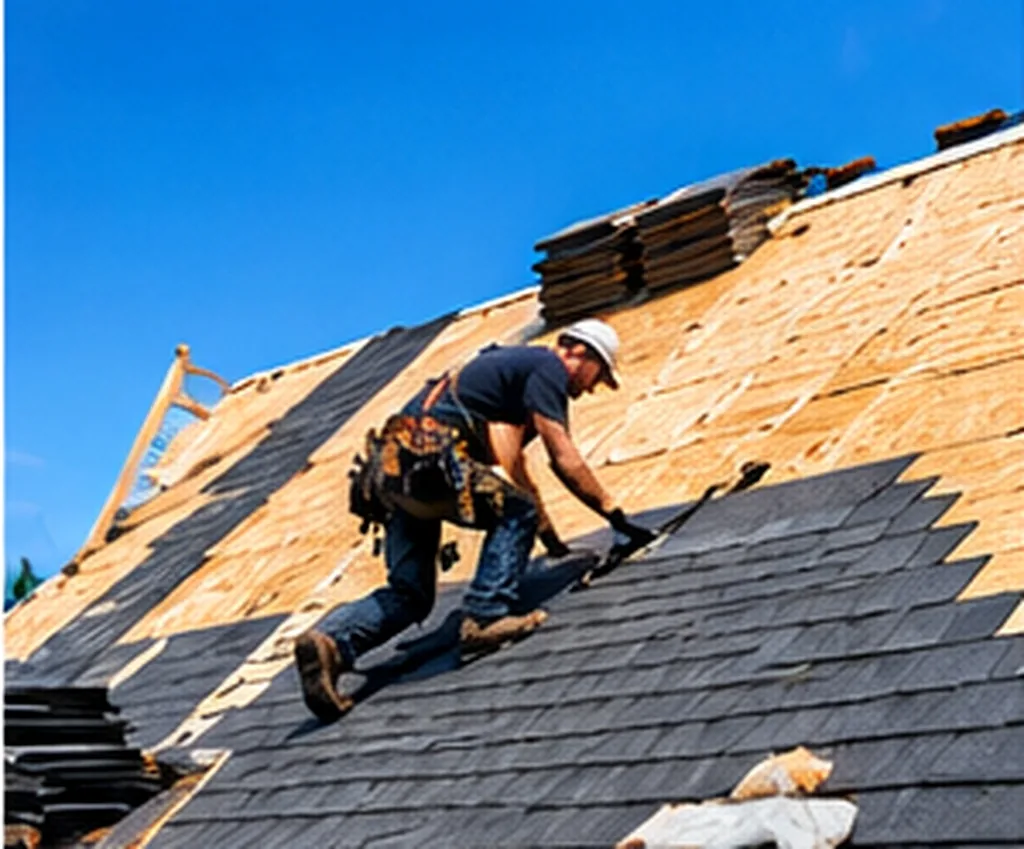
Roof replacement removes the existing roof covering down to the deck and installs a complete new system: underlayment, ice-and-water barrier, flashing, field material and ventilation. In Colorado, most replacements are driven either by accumulated hail damage or by a roof reaching the end of its service life under heavy UV exposure.
What a full roof replacement includes
A complete replacement is a system, not just a new surface. The old covering is torn off to expose the deck, which is then inspected and repaired — any sheathing that is soft, delaminated or rotten gets cut out and replaced. Only then does the new assembly go on.
A properly specified Colorado re-roof includes a self-adhering ice-and-water membrane at eaves, valleys and penetrations, synthetic underlayment across the field, new drip edge, new step and counter flashing where the roof meets vertical surfaces, new pipe boots, the field material itself, and a balanced intake-and-exhaust ventilation system.
Ventilation is the part most often shortchanged, and it matters more in Colorado than most places. A roof with exhaust at the ridge but no matching intake at the soffits will run hot in summer and contribute to ice damming in winter, shortening the life of the shingles you just paid for. Ask any contractor you speak with to explain the intake side of their ventilation plan specifically.
Signs it is time to replace rather than repair
Roofs rarely fail all at once. They accumulate problems until repairs stop being economical. The judgment call is easier when you know what the thresholds actually are.
Replacement is usually the better decision when:
- Damage spans multiple slopes. Hail that hit one elevation is a repair; hail across the whole roof is a replacement, and insurers often treat it that way.
- The roof is near the end of its rated life. Putting a repair into a roof with two years left rarely pays back.
- Granule loss is widespread. Once the mat is exposed across large areas, the shingles are no longer weatherproof regardless of how they look from the street.
- Shingles are cupping, curling or cracking generally rather than in one spot — a sign of heat and UV fatigue across the whole field.
- You are repairing repeatedly. Three service calls in two years usually means the system, not the spot, is the problem.
- The deck is sagging between rafters, which indicates long-term moisture exposure and needs structural attention.
Roofing materials that work well in Colorado
Material choice matters more here than in milder climates, because the roof has to handle hail impact, extreme UV, wide daily temperature swings and — at altitude — significant snow loads.
| Material | Why Colorado owners choose it | Points to consider |
|---|---|---|
| Architectural asphalt shingles | The default across the Front Range. Wide colour range, straightforward to repair, familiar to every contractor in the state. | Standard shingles are vulnerable to hail. Many owners in high-hail areas step up to an impact-rated product. |
| Class 4 impact-rated shingles | Rated to the highest level of the UL 2218 impact standard. Many Colorado insurers offer a premium discount for installing them. | Higher material cost up front. Ask your insurer to confirm the discount in writing before you buy. |
| Standing seam metal | Sheds snow well, very long service life, excellent in mountain and wildfire-exposed areas. | Higher cost and a smaller pool of qualified installers. Can dent under severe hail without losing function. |
| Concrete and clay tile | Durable under UV, non-combustible, distinctive appearance. | Heavy — the structure must be able to carry the load. Individual tiles can crack under hail impact. |
| Synthetic composite | Mimics slate or shake with much lower weight and strong impact ratings. | Premium pricing and fewer experienced installers in rural parts of the state. |
The Class 4 question comes up on nearly every Front Range replacement. The UL 2218 standard rates roof coverings from Class 1 to Class 4 by impact resistance, with Class 4 the most resistant, and a number of Colorado insurers reflect that in premium pricing. Whether the payback works depends on your carrier and how long you plan to stay, so it is worth a call to your agent before you commit. The metal roofing options are worth a look too if you are weighing long-term durability.
The roof replacement process, step by step
Knowing the sequence makes it much easier to tell a well-run project from a sloppy one.
Inspection and documentation
A contractor assesses the full roof, photographs the condition and measures the roof area. If a storm is involved, this documentation supports the insurance claim.
Written scope and contract
Colorado law requires residential roofing work to be covered by a written contract specifying the scope of services and materials. It must also include your right to rescind.
Permit
The contractor pulls a permit with your city or county. Every roofing project in Colorado requires one before work begins.
Material delivery and property protection
Material is staged, landscaping and windows are protected, and a dumpster or trailer is positioned for the tear-off.
Tear-off
The old covering comes off down to the deck. This is when hidden damage becomes visible.
Deck inspection and repair
Damaged sheathing is replaced. Good contractors flag this and document it rather than covering it over.
Underlayment and flashing
Ice-and-water barrier at vulnerable areas, synthetic underlayment across the field, new drip edge and new flashing at every penetration and wall intersection.
Field installation
Shingles or panels are installed to the manufacturer specification — nailing pattern and placement determine whether the wind warranty holds.
Ventilation
Ridge or box vents installed and matched with adequate soffit intake.
Cleanup and magnet sweep
Debris removed and the property swept for nails, usually more than once.
Final inspection and sign-off
The jurisdiction inspects the work. You receive warranty documentation for both material and workmanship.
What affects roof replacement cost in Colorado
We will not publish price ranges, because a number not based on your actual roof is worse than no number at all. The variables that drive the figure are consistent, though.
Cost is driven by roof area measured in squares, pitch and complexity, the number of layers to tear off, how much decking needs replacing, the material you select, access and storey height, ventilation work, and local permit fees. A simple single-storey gable roof and a cut-up two-storey roof of the same square footage are very different jobs.
If an insurance claim is funding the work, the mechanics differ again — the scope is negotiated with your carrier rather than quoted as a lump sum. Our guide to Colorado roofing cost factors breaks down each variable, and the insurance claim guide covers how replacement cost value and actual cash value settlements differ.
Choosing a roof replacement contractor in Colorado
A replacement is one of the larger purchases a homeowner makes, and the roofing market attracts storm-chasing operators after every major hail event. A few checks filter most of them out.
Colorado does not issue a statewide roofing licence. Roofers are licensed at the city or county level in larger jurisdictions, and every project requires a local permit. So the question is not "are you licensed in Colorado" — it is "are you licensed in my jurisdiction, and will you pull the permit." A contractor who hesitates on that is telling you something important.
Confirm they carry general liability and workers compensation coverage, and ask for certificates directly from the insurer rather than a photocopy. Get the full scope in writing. And be aware of your statutory protections: under Colorado law a contractor cannot pay, waive or rebate your insurance deductible, and you have the right to rescind a residential roofing contract within 72 hours of being notified your insurer has denied the claim.
When you call us we match you with contractors already working in your jurisdiction, whether that is Denver, Colorado Springs or a smaller community. You can also see every area we cover through our statewide roofing network.
Whichever situation applies to you, the starting point is the same: an inspection from a contractor who can legally work at your address. We connect property owners with roofing contractors throughout Colorado across all fifty cities we cover, matched by jurisdiction rather than by whoever happens to be nearest. If you are weighing this service against another option, our overview of local roofers in your part of Colorado sets out everything we help with.
Roof Replacement — common questions
How long does a roof replacement take?
A typical single-family asphalt shingle replacement is completed in one to three days, weather permitting. Larger homes, steep or complex roofs, tile and metal systems, and jobs that uncover significant deck damage take longer. Colorado afternoon storms during monsoon season can add days to a schedule.
Can I put a new roof over the old one?
Some jurisdictions permit a single overlay, but it is rarely a good idea in Colorado. An overlay hides deck damage, adds weight, traps heat that shortens shingle life, and makes future hail claims harder to assess. Most reputable contractors here recommend a full tear-off, and many manufacturers limit warranty coverage on overlays.
What time of year is best for roof replacement in Colorado?
Late spring through early autumn offers the most reliable conditions, though that is also the busiest period because it follows hail season. Asphalt shingles need adequate temperature to seal properly, so deep winter installs require extra care. Work does continue year-round statewide — contractors adjust their methods for cold-weather installation.
Will my insurance pay for a full replacement?
It depends on the extent of storm damage and your policy. Adjusters typically assess impacts per test square across each slope; enough damage across enough of the roof supports a full replacement rather than a repair. Whether you receive replacement cost value or actual cash value depends on your specific policy language and the age of your roof.
What warranty should I expect on a new roof?
Expect two separate warranties: a manufacturer warranty covering the material itself, and a workmanship warranty from the installing contractor covering the installation. Workmanship warranty lengths vary considerably between contractors. Get both in writing, and understand that a workmanship warranty is only as good as the company standing behind it.
Roof Replacement across Colorado
We connect property owners with contractors offering roof replacement in every city we cover. These are our busiest areas for this service:
See all 50 Colorado cities we cover →
Related roofing services
Get a free roof replacement quote
Call and we will connect you with an independent local roofing contractor covering your area.
(720) 791-0495Mon–Fri 7am–7pm · Sat 8am–5pm · Sun 9am–4pm (MT)