
Emergency Roof Repair in Colorado
Emergency roof repair in Colorado.
- Emergency tarping and leak containment
- Independent local contractors
- Insurance documentation
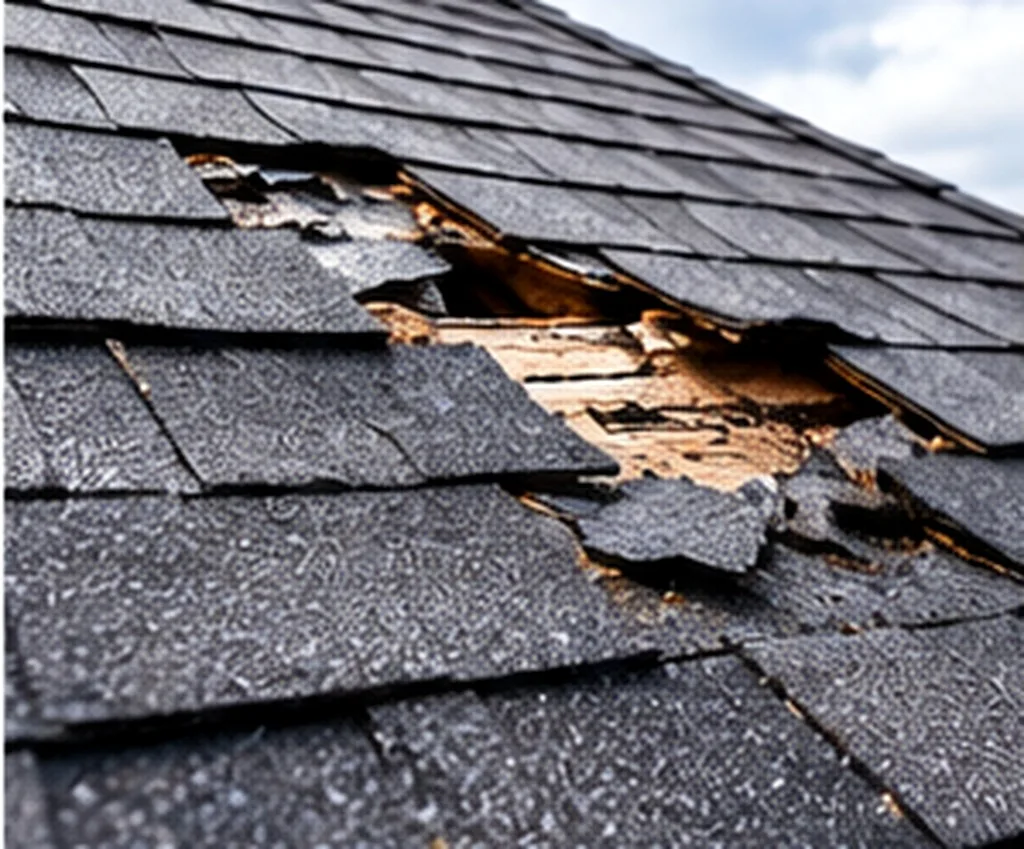
Emergency roof repair is immediate intervention to stop water entering a building — tarping an opening, containing an active leak, or stabilising storm-damaged material. It is a temporary measure that protects the structure until a permanent repair can be scheduled, and most insurance policies require you to take these steps.
What counts as a roofing emergency
Not every roof problem needs an emergency response, and treating a minor issue as an emergency usually just costs more. The distinction is whether damage is actively progressing.
Call for emergency service if:
- Water is actively entering the building. Every hour of intrusion spreads further into insulation, drywall, framing and belongings.
- A tree or large limb has struck the roof. There may be structural damage and an open hole in the deck.
- Wind has removed a significant area of roofing material, leaving the deck or underlayment exposed to the next storm.
- The roof deck is visibly sagging, which can indicate a structural problem rather than only a covering problem.
- Material is hanging loose where it could fall onto people, vehicles or a walkway.
- A ceiling is bulging or holding water, which is both a collapse risk and an electrical hazard.
If none of these apply — a few missing shingles after a windstorm, a stain that has not grown, granules in the gutter — you need a prompt inspection rather than an emergency callout. Book a roof inspection and have it assessed properly.
What to do while you wait
A few actions genuinely help, and one common instinct does not.
Move people, pets and valuables out of the affected area. Shut off electricity to that part of the building if water is anywhere near fixtures or wiring — water and electricity together is the most serious immediate hazard in a roof leak. Put containers under active drips and lift or cover furniture.
If a ceiling is bulging with trapped water, a small relief hole at the low point lets it drain in a controlled way rather than letting the ceiling fail all at once. Stand to the side when you do it, and only if it is safe to reach.
Photograph everything before you move or clean anything, and keep the photographs organised by room. Then do not go onto the roof. In rain, snow or wind, on a damaged surface, this is how people get badly hurt — and the view from up there will not change what the contractor does when they arrive.
What emergency crews actually do
An emergency call is about stabilisation, not a finished repair. The objective is to stop water entry and prevent the damage spreading, which buys time for a proper assessment and a permanent fix.
Typically that means installing a reinforced tarp over the affected area, anchored properly so it survives the next weather event rather than lifting off overnight. Where there is a puncture or structural damage, temporary sheathing may go over the opening. Loose material that poses a falling hazard is secured or removed, and gutters or drainage paths blocked by debris are cleared so water is moving away from the structure.
Crews also document as they work. Those photographs are valuable later, because the tarp covers up what the damage originally looked like. If a claim follows, that record matters — our Colorado insurance claim guide explains how emergency mitigation fits into a claim and why your receipts are worth keeping.
Emergency repair and your insurance
Most homeowners policies place a duty on you to take reasonable steps to prevent further damage after a covered loss. Emergency tarping is exactly that, and the cost of reasonable emergency mitigation is typically reimbursable under the policy.
Practically: keep every receipt, photograph the damage before the tarp goes on, and notify your insurer as soon as you reasonably can. You do not need to wait for an adjuster before stopping water entry — delaying mitigation to wait for approval can actually work against you, because the additional damage may not be covered.
Once the immediate problem is contained, the permanent work follows the normal process: full assessment, scope agreed with your insurer where a claim is involved, then repair or replacement depending on the extent of the damage.
Emergency response across Colorado
Response time depends heavily on how widespread the event was. After a localized problem — a single tree strike, an isolated leak — a contractor can often reach you the same day. After a major regional hailstorm or windstorm, every roofer in the affected area is fielding calls simultaneously and the queue is long.
Geography matters too. Contractor density is highest along the Front Range corridor, so response in Denver, Aurora or Colorado Springs is typically faster than in mountain or eastern plains communities, where crews may be travelling a considerable distance and winter road conditions affect timing.
Calling early in an event makes a real difference. When you reach our Colorado roofing line we route you to contractors covering your jurisdiction and tell you honestly what the realistic timeframe looks like rather than promising a response nobody can deliver.
Whichever situation applies to you, the starting point is the same: an inspection from a contractor who can legally work at your address. We connect property owners with our Colorado roofing line across all fifty cities we cover, matched by jurisdiction rather than by whoever happens to be nearest. If you are weighing this service against another option, our overview of roofing contractors serving your area sets out everything we help with.
Emergency Roof Repair — common questions
How quickly can someone get to my property?
After an isolated incident, often the same day. After a widespread storm, longer — every contractor in the region is responding at once. We will tell you the realistic timeframe when you call rather than quoting a response time that cannot be met.
Does emergency roof repair cost more?
Emergency response generally carries a premium over scheduled work, reflecting the out-of-hours callout and crew disruption. Most policies reimburse reasonable emergency mitigation costs as part of the claim, so keep your receipts and documentation.
Will a tarp hold through another storm?
A properly installed, anchored reinforced tarp is built to hold through subsequent weather. It is still a temporary measure — tarps should be replaced by a permanent repair within weeks, not left in place for a season. Check it after each storm.
Should I call my insurance company or a roofer first?
If water is actively entering, call a roofer first to stop the damage — your policy generally requires you to mitigate. Then notify your insurer promptly. For damage that is not actively worsening, either order works; many homeowners find it easier to have a contractor assessment in hand before they file.
Can I tarp the roof myself?
We would strongly advise against it. Getting on a wet, damaged or steep roof in bad weather is how serious injuries happen, and an improperly anchored tarp can tear free and cause more damage than it prevents. Containing water inside the building is the useful thing you can safely do while you wait.
Emergency Roof Repair across Colorado
We connect property owners with contractors offering emergency roof repair in every city we cover. These are our busiest areas for this service:
See all 50 Colorado cities we cover →
Related roofing services
Need help right now?
If water is entering the building or material is hanging loose, call rather than using the form — a phone call gets a faster response.
(720) 791-0495Mon–Fri 7am–7pm · Sat 8am–5pm · Sun 9am–4pm (MT)